


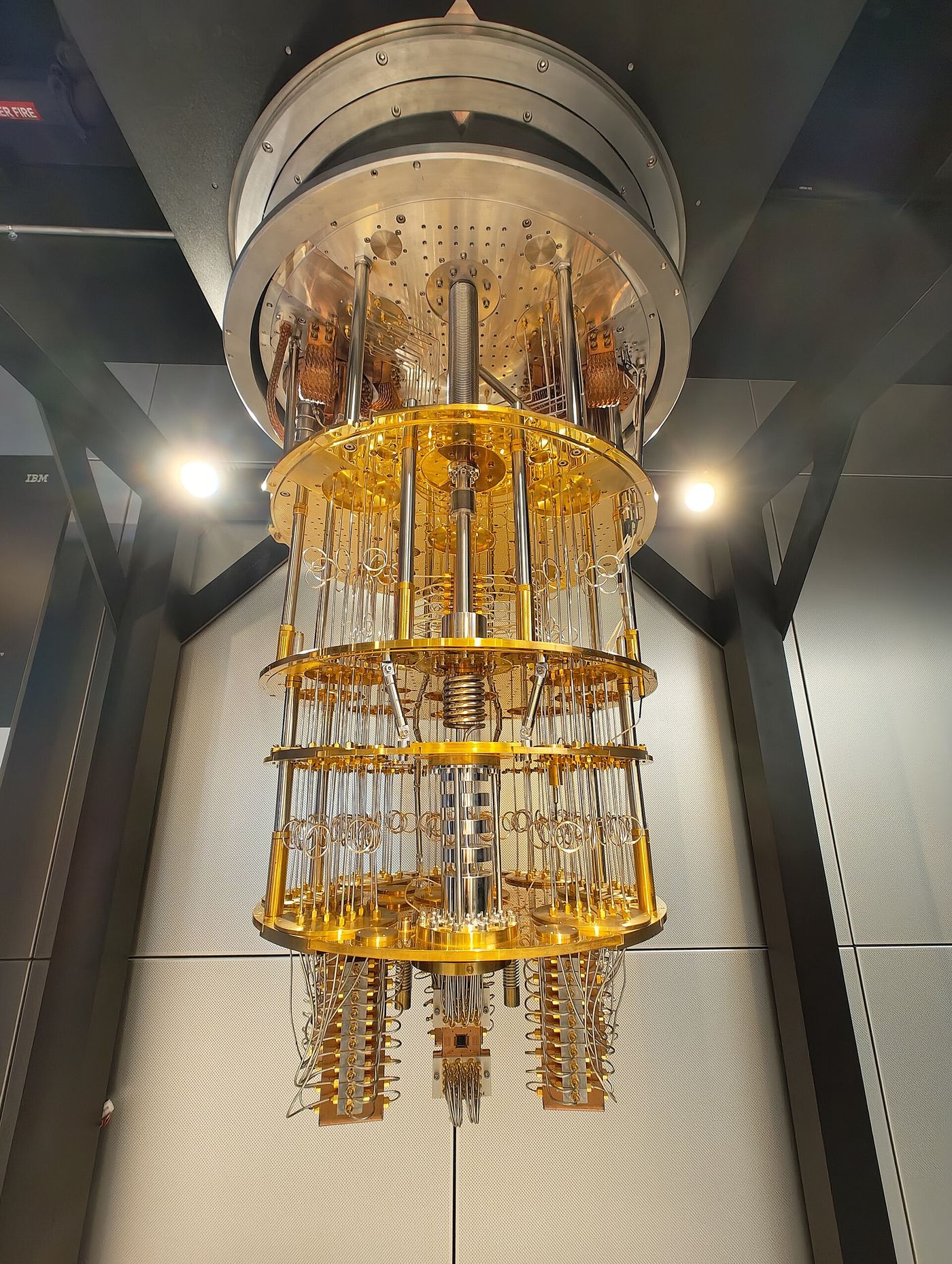
IBM announced plans on 16 November with NVIDIA and Fermilab to build a modular quantum-classical co-design platform, pairing powerful conventional supercomputers with quantum machines. The project will co-locate NVIDIA DGX B200 systems with IBM quantum computers, including systems powered by the IBM Quantum Nighthawk processor, so that the two kinds of hardware can work on a single problem together. Quantum computers handle certain calculations in ways classical machines cannot, but they still need conventional systems to prepare problems, correct errors and interpret results. Building them side by side, rather than in separate facilities, is meant to make that partnership fast and practical. Fermilab, the particle physics laboratory near Chicago, will use the system for simulations of subatomic particles, calculations that are far beyond the reach of ordinary computers.
What the Evidence Shows
Hybrid quantum-classical computing is aimed at problems that neither technology can solve alone, from simulating new materials and molecules to modelling the particle collisions studied at Fermilab. Scientists hope the platform will speed up the search for better batteries, catalysts and medicines, and help answer fundamental questions in physics. The obstacles remain formidable: quantum bits are fragile, error rates are high, and scaling up to useful machines will take years of engineering. But by designing the hardware and software together, the three partners aim to learn what a working quantum data centre should actually look like. Progress will be measured in small steps: fewer errors, longer calculations and problems that grow steadily closer to real-world science rather than demonstrations in a laboratory. Reporting and analysis from sources such as Wired track the same developments, and specialists following the quantum-classical computing platform from IBM and NVIDIA say the direction is now consistent across independent lines of evidence.
The Wider Context
The wider context is an industry learning to ship capability and restraint together. Products built around the quantum-classical computing platform from IBM and NVIDIA now launch with safety evaluations, usage data and rollback plans as standard, because enterprise buyers and regulators ask for them in the first meeting. Companies that treated those questions as friction are discovering they have become the purchase criteria.
What Happens Next
What happens next for the quantum-classical computing platform from IBM and NVIDIA depends less on another breakthrough than on the unglamorous work of reliability, pricing and support. The buyers evaluating it now are not enthusiasts; they are operators with budgets and auditors, and their checklists will decide the timeline. On the evidence of the current pilots, the technology has earned the right to be judged by them. You can follow related developments in our coverage of technology.
None of this will be settled by a single announcement, study or product launch. The pattern to watch is accumulation: independent confirmations, honest reporting of failures and steady improvement in the underlying numbers. Readers who follow those signals, rather than the loudest claim of the week, will understand this subject better than most of the commentary surrounding it suggests is possible.
