


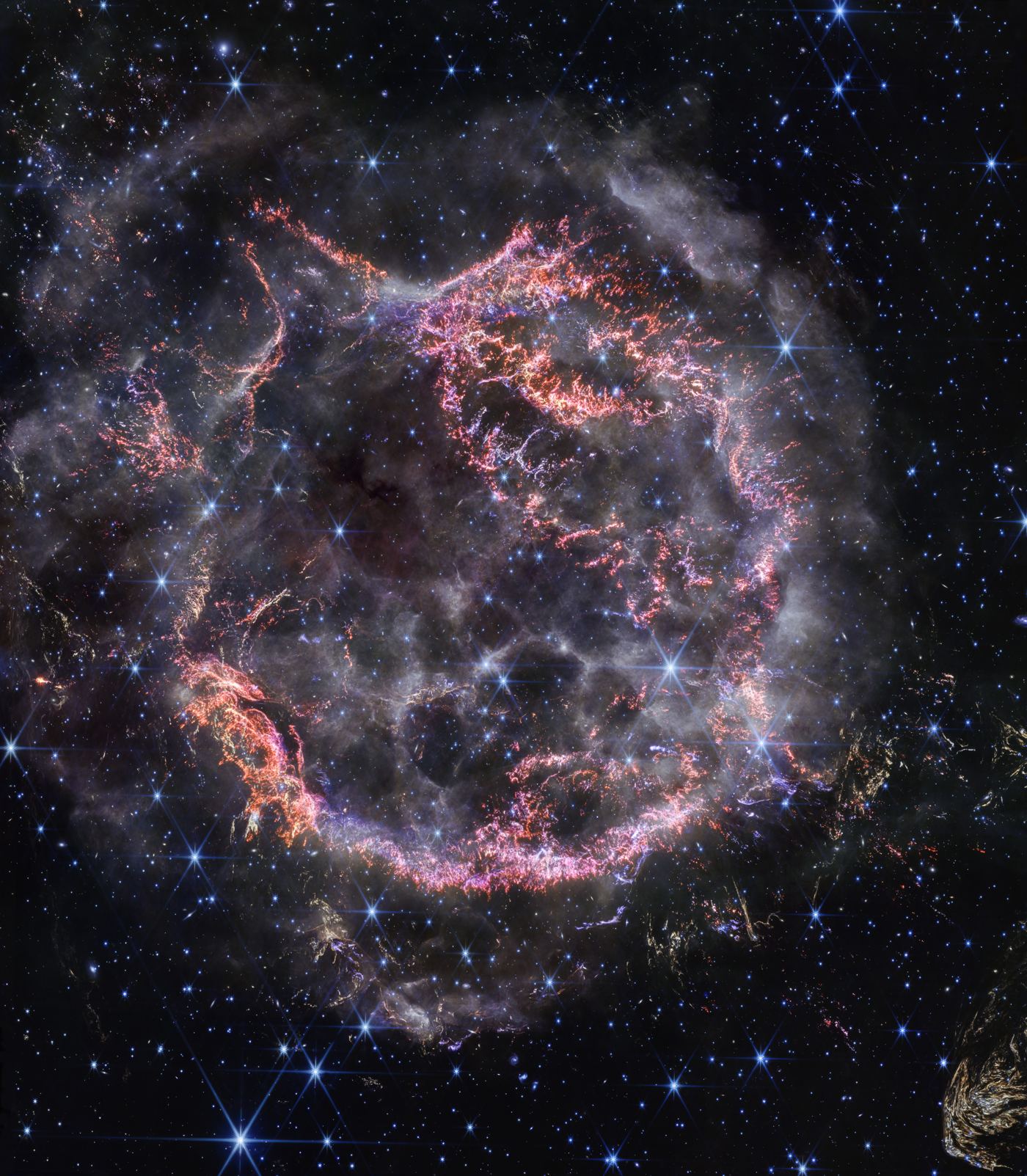
The James Webb Space Telescope has found that the stellar layers of the star that became Cassiopeia A mixed only hours before it exploded, according to new data released on 23 November 2026. The observation follows Webb’s broader study of the supernova remnant, the gas and dust left behind by the massive star, which is being mapped in solar-system-sized dust clumps. The findings were published in The Astrophysical Journal Letters and add to expectations that the remnant will eventually seed new stars and planets. Cassiopeia A is one of the most studied supernova remnants in the sky. The data were released on 23 November, adding to Webb’s ongoing study of the supernova remnant.
What the Evidence Shows
Supernovae are the factories that make many of the heavy elements in the Universe, scattering them into space where they can form new stars, planets and even life. Knowing exactly when the star’s layers mixed matters, because it tells astronomers how the explosion itself unfolded in its final hours. Webb’s infrared vision lets it peer through dust that hides these details from other telescopes, revealing the structure of the remnant in fine detail. The work shows how a telescope built to look at the distant Universe can also rewrite the story of a familiar object much closer to home. Future observations may show how the remnant’s dust helps seed the next generation of stars. Reporting and analysis from sources such as NASA track the same developments, and specialists following the Webb Cassiopeia A mixing discovery say the direction is now consistent across independent lines of evidence.
The Wider Context
Funding bodies are watching the Webb Cassiopeia A mixing discovery closely because the work sits at the junction of basic curiosity and practical return. Grant panels increasingly ask for a path from discovery to application, while researchers push back that the most valuable uses of fundamental science are rarely the ones written into the original proposal. The tension is productive when both sides stay honest about timescales.
What Happens Next
The long view on the Webb Cassiopeia A mixing discovery is that fields advance by accumulation rather than by single announcements. This result adds a solid, checkable piece to a structure many teams are building, and its authors have shared their data so the piece can be tested from every side. That is how the picture eventually becomes reliable enough to act on. You can follow related developments in our coverage of science.
It is also worth remembering how quickly the picture in this area has changed before. Positions that looked settled a few years ago have been revised as new data arrived, and the same humility is appropriate now. The strongest coverage of this subject, and the most useful advice, tends to come from sources that update their views openly when the facts move, rather than defending an earlier position long after it has stopped fitting the evidence available.
