


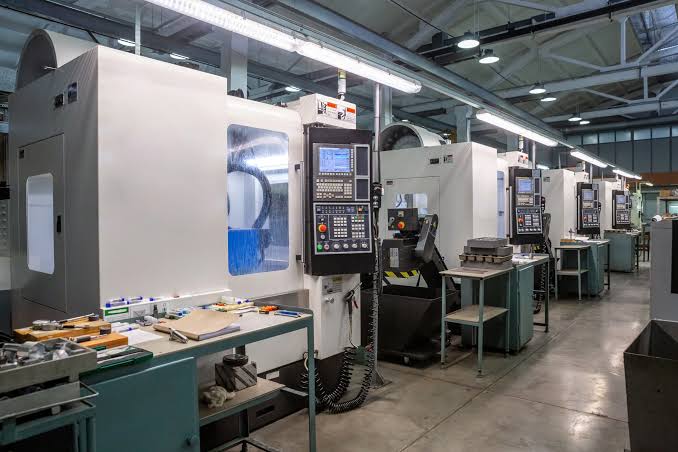
The manufacturing landscape is undergoing a profound transformation. Across industries, the demand for lighter, stronger, and more precisely engineered components is accelerating at an unprecedented rate. Two sectors at the forefront of this shift are automotive and robotics—both of which rely heavily on advanced CNC machining technologies to produce the high-performance aluminum components that define next-generation products.
The scale of this transformation is substantial. The precision machining market continues to expand as automotive, aerospace, and industrial applications demand increasingly complex components with tighter tolerances. Aluminum has become the material of choice across these sectors, prized for its exceptional strength-to-weight ratio, thermal conductivity, and corrosion resistance. Different alloys serve different purposes, and shops that have developed documented processes across multiple grades deliver more consistent results.
Aluminum’s Role in Automotive Innovation
The automotive industry’s transition to electrification has fundamentally changed the types of components that require precision machining. Electric vehicles use significantly more aluminum than their internal combustion counterparts. Battery housings, motor frames, cooling plates, and structural components are all increasingly specified in aluminum alloys. The lightweighting imperative is even more critical for EVs, where every kilogram saved extends range and improves performance.
Battery enclosures represent one of the most demanding applications for aluminum machining. These components must protect sensitive battery cells while minimizing weight. They require flatness tolerances that push the limits of conventional machining. Manufacturers producing these components must hold tight tolerances across large surface areas, managing thermal expansion and material stress to prevent distortion. This is where advanced multi-axis CNC milling centers with high-speed spindles become essential.
Motor housings and cooling plates present similar challenges. The move toward higher power density in electric motors has increased the importance of efficient thermal management. Aluminum’s excellent thermal conductivity makes it ideal for cooling plates that dissipate heat from power electronics and battery packs. These components often feature complex internal geometries—coolant channels that must be machined with precision to ensure consistent flow and heat transfer.
For companies producing these critical components, aluminum automotive components machining expertise has become a strategic qualification for suppliers seeking to serve the growing EV market. The shops that have invested in five-axis machining, automated quality control, and documented process libraries are the ones capturing the most demanding automotive programs.
Robotics: Precision at Scale
The robotics sector is experiencing its own revolution. From industrial automation to humanoid robots, the demand for precision-machined aluminum components has accelerated dramatically. Robots require lightweight, rigid structures that can withstand repeated motion while maintaining positional accuracy. Aluminum is the material that enables this combination of properties.
Robotic arms, end effectors, and structural frames all rely on precision-machined aluminum components. These parts must balance strength and weight, often featuring complex internal geometries that reduce mass while maintaining stiffness. The machining of these components demands multi-axis capability, tight tolerances, and excellent surface finishes.
Industrial robots operate in demanding environments where reliability is non-negotiable. A poorly machined structural component can affect a robot’s accuracy over its entire working life. A rough surface finish on a mating surface can lead to misalignment and premature wear. These are not theoretical concerns—they are real-world consequences that separate quality suppliers from the rest.
For manufacturers in the robotics sector, aluminum robotics parts manufacturing capability is essential. Suppliers that understand the unique requirements of robotic applications—tight tolerances, complex geometries, and high material consistency—bring significant value to the supply chain.
The emergence of humanoid robots represents a particularly exciting frontier. These machines require an unprecedented combination of lightweight structures, high precision, and durability. Each joint and actuator demands components that push the boundaries of conventional machining. As this sector evolves from prototyping to scaled production, the demand for precision-machined aluminum components will only intensify.
The Technology Making It Possible
Meeting the demands of automotive and robotics applications requires more than conventional CNC equipment. Multi-axis machining centers—particularly five-axis systems—have become essential for complex aluminum components. Five-axis capability enables multi-directional cutting that reduces setups, improves repeatability, and shortens lead times. For components with complex internal geometries or multiple features that must maintain precise alignment, this capability is not optional.
High-speed spindles enable the surface finishes and cycle times that automotive and robotics applications demand. Aluminum’s excellent machinability makes it ideal for high-speed machining, but the approach requires careful chip management. Recut chips can mar surfaces and accelerate tool wear. Effective coolant delivery and chip evacuation are essential.
In-process probing verifies critical dimensions between cycles, allowing the machine to compensate for tool wear before parts drift out of tolerance. This capability is essential for high-volume production, where consistency across thousands of parts is non-negotiable.
Quality Systems and Traceability
For both automotive and robotics applications, quality is not just about inspection—it is about documentation. Manufacturers in these sectors require full material traceability from incoming certification to finished component. Every batch of aluminum must be verified against its mill certificate, and every part must be traceable back to that original material.
Shops that serve these industries maintain rigorous quality systems. They perform in-process inspections, track statistical process control data, and provide first-article inspection reports upon request. Certifications such as IATF 16949 for automotive and ISO 9001 are not just badges—they require documented processes, internal audits, and continuous improvement.
Automation and the Future of Machining
The automotive and robotics sectors are driving automation across the supply chain. Robot-tended CNC cells, automated pallet changers, and lights-out manufacturing enable continuous production with minimal supervision. For high-volume aluminum components, automation delivers substantial cost savings while maintaining the quality that customers expect.
Data-driven process control is equally transformative. AI-driven machining uses real-time sensor feedback to adjust feeds, speeds, and toolpaths automatically in response to vibration, load, or temperature changes. Digital twins simulate the entire machining process, enabling virtual commissioning and clash detection before the first chip is cut.
Strategic Sourcing for the New Era
For procurement professionals and engineering leaders in automotive and robotics, the choice of manufacturing partner has direct implications for product performance, time-to-market, and competitive advantage. The shops that have invested in multi-axis machining, automated quality control, and documented material expertise are positioned to capture the most demanding programs.
The next phase of growth in both automotive and robotics will be defined by the ability to scale production of complex aluminum components without sacrificing quality or consistency. The manufacturers that succeed will be those that treat precision machining as a strategic capability rather than a commodity service. And the partners they choose will be those that have demonstrated the commitment to quality, the investment in technology, and the depth of expertise that these demanding applications require.
