


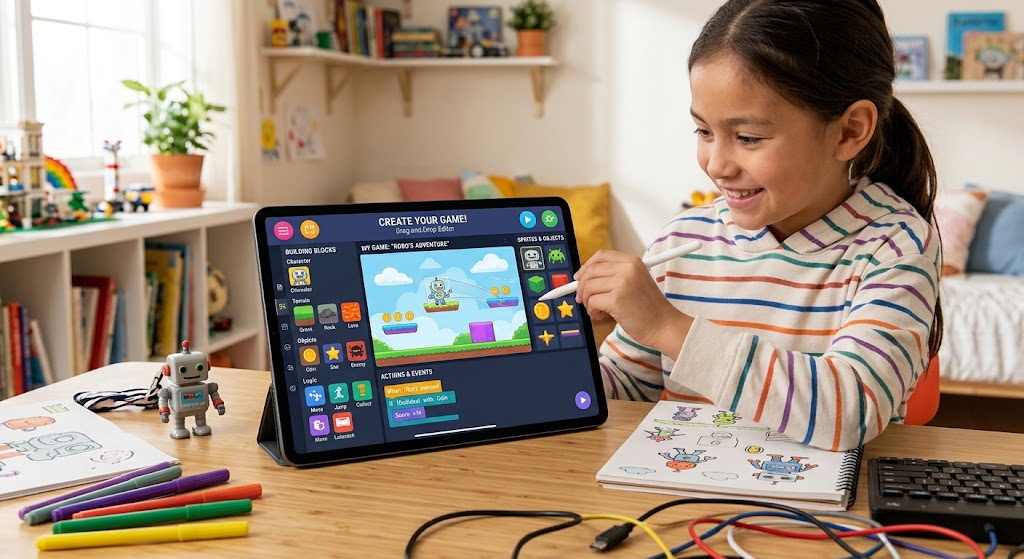
Have you ever had a game idea you could not get out of your head but found yourself perplexed upon trying to bring this onto a medium? That is, perhaps you want to design some puzzle, adventure game, or even a game world that players can enter, discovering challenges as they go through. The best part is that even if you have no background in complex coding or fancy software, you can still turn your ideas into realously with game builders with simple drag-and-drop tools that you do not need to perform advanced technical operations. The controller platforms such as Astrocade let creators test new concepts and find innovative ways to create games.
This is a comprehensive game making guide that shows you how to use basic dragging tools, create fun gameplay, and make interactive games, step by step. As you learn to use this guide, you’ll mingle and experiment with many features yet learn how to explore your creative energy and change up the game elements as you gain confidence in your designs. Whether you are just starting out or just need some fresh inspiration, some ideas you could use to learn more about making games and produce something that other players can enjoy.
Use Simple Dragging
If you could create your own video game, it could sound like an intimidating endeavour for newcomers. The truth is it can be super simple if you’re not well-versed in code syntaxis, which is often what people think of when they hear advanced code. The process is more about matching the shape of the building so the actual creation process reduces to selection of an object, putting it in the right position and letting it occupy the biggest position on the screen. It steps back from the design aspects and gives you more space to be creative about the visual:
When you create your own game, a game editor that includes visual editing features can help you add elements like background, characters, buttons to your project. Perhaps you are making an uncomplicated adventure game. Place a character to the screen, then create an obstacle with a set course. Keep placing things in different arrangements until the look and feel of your game resembles exactly what you want it to be.
Design Fun Gameplay
Excellent gameplay is why you play until you get a flow. Think about what the players have to do, what challenges they will face, and how they can finish each level. You may try a puzzle that challenges problem-solving skills or go for an adventure game where players are more suited to exploring new domains.
Imagine how your game will feel when a player plays it for the very first time. Make use of basic controls, well written instructions & interactive challenges to create an experience they’ll love. Adding rewards (Points, New Levels, etc.) is a great way to keep players motivated to come back for more. Test these ideas and hone into what features will engage players.
Build Games Easily
It becomes easier to create a game if you break the process down into small steps. You should think of a rudimentary concept and just one playable level before you use a lot of other content with this method of operation. This allows you to see how features interact without being overwhelmed by ad hoc tasks.
A game builder with an online platform could supply you templates and elements you did not create, which save precious time during the build phase. Color them in, add characters, alter the layout to your taste. Implement new features slowly, when the foundation version is functional. Promptly test progress to spot bugs and make the overall experience better.
Explore Drag Tools
A lot of drag and drop tools have different features that could fit your project; some tools target just games, others have options for animations, interactive objects and more advanced gameplay. Match the features available prior to selecting a tool to achieve your goals and experience level. Experiment to get to know how each feature works. Move objects, change backgrounds, reposition a character, and make simple interactions between elements of your game,etc. Find inspiration and creative possibilities by looking into platforms such as Astrocade. The more you experiment with game design, the more you will feel at ease and have ideas for projects in the future.
Conclusion
It is a lot easier to create interactive games when you start with small tools and have a clear plan. Learners can use easily drag and drop features to create objects, design levels and explore gameplay without advanced coding. Handling only one feature at a time, evaluate your progress and enhance your creations when you find something that might be even better. Keeping things small is also a great way to practice basics before getting into more sophisticated projects.
Making projects into a fun gaming experience of your own, you can learn with practice and creativity. Trying out various platforms, try games other than your own and seeing how to work to improve your projects with interaction. You can bring in inspiration from a game like Swim Racer and maybe find novel ways to develop challenges, levels and interactive functions. Keep learning and testing, because every new project can help you refine your craftsmanship and do something all-new.
Frequently Asked Questions (FAQs)
What Is a Game Builder?
A game builder is software for working through the creation of games, including defining their characters, levels, backgrounds and gameplay features. Some of these tools even have visual editors and pre-built components, which could help beginners get started.
Can I Create Games Without Coding?
Some other platforms provide plug-and-play tools to create simple games without coding. There are many tools to drag-and-drop objects, change designs, and use existing features to create interactive experiences.
What Are Drag-and-Drop Game Tools?
It is a game-making tool in which you can use a visual editor to pick components and position them with drag and drop. It may let you put characters, backgrounds, buttons, and other objects into the game you are creating without the need for advanced programming skills.
Which Game Should Beginners Create First?
Beginners can start out with a simple puzzle, platform, quiz or adventure game. These are projects to learn the foundations of game design, starting with how controls, challenges and levels fit together.
How Can I Make My Interactive Game More Fun?
Create easy controls, eye-catching visuals, intriguing challenges, and engaging gameplay. Keep players engaged with new levels, innovative challenges and helpful feedback.